Class bias in the criminal justice system
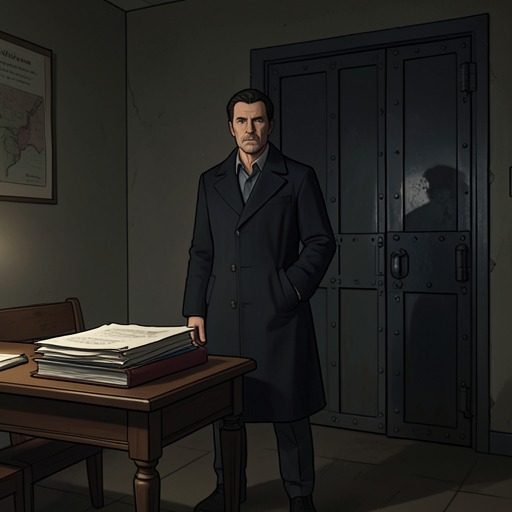
Great ExpectationsClass bias in the criminal justice system shapes how evidence, character, and punishment are interpreted in Great Expectations. Its sharpest demonstration is Magwitch’s account of his trial alongside Compeyson: the better-educated, more genteel-looking man receives the benefit of his social presentation, while Magwitch’s poverty, prior convictions, and rough speech make him easier to cast as the principal culprit. Other episodes complicate the picture by showing both the forceful advocacy of Mr. Jaggers and the hard legal consequences that await Magwitch when he returns to England.
Magwitch and Compeyson on Trial
Magwitch describes a criminal partnership that ended in a joint prosecution for circulating stolen notes, with other charges pending. Before that prosecution, he had already been convicted alone of a misdemeanor while associated with Compeyson, and had been detained several times on suspicion without sufficient evidence. When the two were finally committed for felony, Compeyson proposed separate defenses and no communication between them. Magwitch, extremely poor, sold all his clothes except those he wore in order to obtain Mr. Jaggers’s assistance.
The trial placed the pair side by side, but their appearance invited the court to see them as fundamentally different. Compeyson’s curly hair, black clothes, and white pocket handkerchief marked him as a gentleman; Magwitch saw himself as a common-looking wretch. In the prosecution’s account, evidence seemed to fall heavily on Magwitch and lightly on Compeyson: witnesses could identify Magwitch as the person who came forward and received the money, while Compeyson was seldom seen in the transactions and was presented as merely suspected. The disparity was not simply a difference in what each man had done, but in whose actions could be proved and how those actions could be framed.
Compeyson’s counsel turned that disparity into a social argument. He presented his client as younger and well brought up, and Magwitch as older and ill brought up, inviting the court to treat education and respectability as signs of lesser guilt. Compeyson also had schoolfellows and witnesses who could speak to his standing in clubs and societies. Magwitch, by contrast, was known through prior trials and periods in jails and lockups. Their social histories thus entered the courtroom as evidence of character, making the respectable defendant appear redeemable and the poorer one already marked by criminality.
The difference extended to performance. Compeyson could address the court with polished speech and verses, while Magwitch could only accuse him, in rough language, of being a rascal. The jury recommended mercy for Compeyson, citing his good character, bad company, and the information he supplied against Magwitch; it returned no comparable qualification for Magwitch, whom it found guilty. The judge expressed regret for Compeyson, who might have done well, while describing Magwitch as a former offender with violent passions and a likelihood of worsening. The outcome made classed respectability more than an impression: it helped determine how blame and mercy were distributed.
Unequal Sentences and the Return to England
The sentencing confirmed the contrast. Compeyson received seven years, while Magwitch received fourteen. Magwitch later said that Compeyson escaped after becoming alarmed by his anger, and that Magwitch pursued him, attacked him, and tried to bring him back. Yet Magwitch believed Compeyson’s good character continued to serve him: Compeyson’s punishment was light, while Magwitch was put in irons, tried again, and sentenced to transportation for life. Magwitch nevertheless returned to England, making the disparity between their treatment part of a larger legal predicament.
Mr. Jaggers had previously warned Magwitch, in New South Wales, that he was exiled for life and that returning to England would constitute a felony punishable by the law’s extreme penalty. When Magwitch later explains that being sent away for life makes returning a matter of death, his words state the rule that governs the danger of his presence. His capture follows a failed attempt to escape; Compeyson, who might have testified to Magwitch’s identity, is dead, so the authorities must seek an old prison-ship officer to establish it. Mr. Jaggers admits nothing on the prisoner’s behalf and tells Pip that, once the witness appears, the case will be decided within minutes. The proceeding is therefore shaped not only by the earlier history of class prejudice, but also by the law’s severe treatment of a returned exile.
Mr. Jaggers and the Uses of Legal Advocacy
Wemmick recounts an earlier case that established Mr. Jaggers’s reputation. Roughly twenty years before, Jaggers defended Molly, a woman accused of murdering another woman, and secured her acquittal. The prosecution’s account included jealousy and suspicion that Molly had destroyed her own young child; Jaggers challenged the interpretation of the physical evidence and the assumptions built around her character. Wemmick says the case, which Jaggers worked at the police office and then supported in court, was so striking that it nearly made his career.
Jaggers’s argument redirected attention from an assumed explanation of the marks on Molly’s hands to an alternative account supported by the evidence. Brambles found broken, with shreds of her clothing and spots of blood, supported the possibility that she had forced her way through them. He also challenged the prosecution’s attempt to use the untried suspicion concerning her child as proof of her guilt in the murder. The jury acquitted her, and she entered Jaggers’s service immediately afterward. This episode demonstrates that courtroom outcomes could turn on a lawyer’s ability to expose gaps in an accusation and reorganize the meaning of evidence. It also sharpens the contrast with Magwitch: legal skill can unsettle prejudice, but it does not erase the unequal social credibility enjoyed by defendants such as Compeyson.
The Law’s Reach and Its Limits
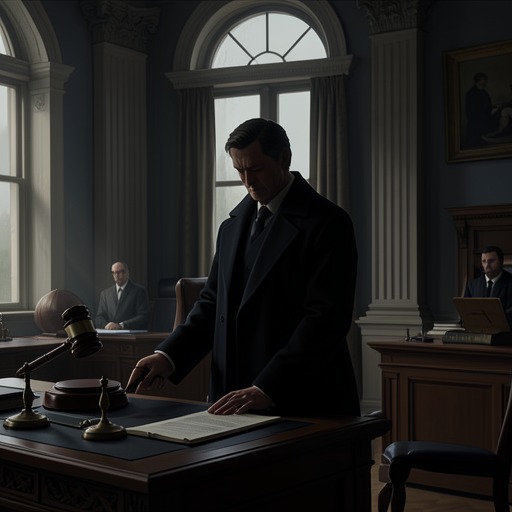
At Magwitch’s sentencing, the court presents his return as the decisive offense: after earlier imprisonments and exile, he had lived peaceably in New South Wales before returning to the country that had banished him. He is then described as denounced, temporarily able to evade the officers of justice, and eventually seized while trying to flee. The judge imposes death under the rule governing his return. This official account concentrates on the legal sequence and the threat to public order; Magwitch’s earlier comparison of himself with Compeyson instead emphasizes how differences in education, appearance, witnesses, and courtroom speech shaped the unequal judgments that preceded it.
The novel’s evidence therefore does not reduce injustice to one isolated verdict. It shows legal proceedings converting social signs into judgments of credibility and character, while also granting skilled counsel the means to contest a case. Magwitch and Compeyson’s contrasting sentences make the class effect unmistakable; Molly’s acquittal shows that the interpretation of evidence can be challenged; and Magwitch’s final prosecution reveals the severity of the law once his return from exile is established. Together, these episodes distinguish the formal machinery of justice from the unequal ways people encounter it.